











Your cart is empty!
C’est bien cassé – Samuel Thompson's reflection on injury

Friend of Restrap, pro Dotwatcher/podcaster , ultra distance maestro and coach, Samuel Thompson should have been spending the summer training for his next ultra race. Things don't always go to plan though. In this blog, he reflects on his injury and the process of recovery. Over to Samuel...
C’est bien cassé
Having ridden over 150,000km during the past 10 years, I had never had a serious incident on the bike, nor an injury keeping me out of action for more than a few days. Some may view that as being lucky, although I am of the mind that we do a lot to create our own luck. On 3 July 2026 however, my luck ran out.

Overtaking a van that I thought was slowing down for a speed bump, the driver suddenly turned into my path without indicating.
My manoeuvre may have been legal, and something I would not have done had the indicators on the van been flashing, but it was hasty and not particularly necessary. I was a mile from home and had nothing more than a few seconds to gain from overtaking to maintain my momentum. My immediate reaction was to blame myself for being so reckless. Over time my reflection has nuanced, but dwelling on who is to blame does little to change what happened.
I landed plum on my elbow, fracturing my olecranon (the pointy part of the joint). With the adrenaline and shock of the impact, it wasn’t actually all that painful at the time. If the driver of the van (to his credit) wasn’t so insistent on taking me to hospital I may well have tried to limp home and convince myself it wasn’t that bad. An x-ray and the words ‘’c’est bien cassé’’ (‘’yeah, that’s well and truly broken’’) then defined the rest of my summer. Once I was discharged with my arm in plaster and back home, I also started to feel the effects of having torn muscles in my groin and ribs. Raising myself from a seated or lying position was uncomfortable to say the least, and the first few nights were rather complicated.
Now, I don’t intend this to come across as a woe betide me tale, as I am very aware that many people find themselves in much more serious situations. This incident did however help to provide perspective, appreciation for what a fit & healthy body can do, and gratitude for what I am able to do. One pertinent example of this is when I realised that tying up my flowing locks wasn’t so simple with one functioning arm. As are many other day-to-day tasks we may take for granted. I sought online advice for how to manage this situation and found much was provided by amputees. My arm would heal, whereas these are burdens they would have to deal with permanently.
Peninsular Divide
Days before this all happened, I was telling Restrap about my plans to take part in the Peninsular Divide. The third edition of this race, stretching 1,500km across mainland Malaysia starts on 18 October. Three-and-a-bit months of build-up felt like a long time and I was confident about carrying my condition across the summer, having just returned from riding the 2,200km Calais-Brindisi Randonnée in 4 days, 17 hours at the end of June. Timescales however both speed up and slow down at times like this.

I was initially told that my arm would be in a cast for three weeks. This ended up being five and a half. The more pressing impediment to my mobility however was my groin, which made walking faster than a hobble a painful act. When exercise is so clearly off the cards, it is somewhat easier to accept. In any case, I knew my mindset had to be to concentrate on what I could do, rather than concerning myself with what I couldn’t at that moment.
Movement in my life holds an importance far beyond training or competing. I value the sense of routine it provides to my day-to-day, the freedom that a fit & healthy body offers, and the mental wellbeing associated with the action of exercise, especially when outdoors. Even if I were to never race or enter an event again, I would still exercise for exercise’s sake.
As I habitually associate movement with positive outcomes, switching my mindset to viewing sitting or lying still as productive was slightly alien. Nevertheless, in the immediate aftermath of my accident this was the only way that I was going to allow my body to recover. Rest and recovery plays a vital role in any training program and, in my role as a coach, I see prescribing easy days, or days off, just as important as any big session. They are productive in the sense of allowing training load to be absorbed and the process of supercompensation to occur. Although I wasn’t going to be gaining any fitness during this enforced rest period, the only way I was going to come back stronger was to accept the situation and see all actions promoting recovery as positive.
A Very Sweaty Cast
Typically, from April/May until close to the end of the year, my indoor bike goes into summer hibernation and all of my riding takes place outdoors. Resuming my Zwift subscription in mid-July was therefore a novel experience.

After two and a half weeks of inactivity, I felt capable of resuming some light exercise. The first few rides on the indoor trainer involved mostly holding the handlebar with one hand, raising it as much as possible and strapping an old chamois to my aerobars to provide a more comfortable, elevated position to rest on. I live in a non-air conditioned apartment in the south east of France, so keeping the place cool in the summer months is a Sisyphean task. The combination of heat, and temporarily lost aerobic fitness, meant my heart rate was hitting numbers I usually see during high-intensity interval sessions whenever I put the slightest hint of meaningful pressure into the pedals.
I took progression progressively though and noticed almost daily improvements in comfort and capacity. The initial release of endorphins was intoxicating, a reminder of why exercise can almost feel addictive at times. Laying my cast-covered arm in the aerobars was soon a comfortable position and I was gradually able to support myself with both arms on the handlebars. I was still cautious of doing too much too soon. Exercise was once again a good thing, but only if I wasn’t in pain or causing too much stress to my recovering body.
As the intensity I was able to ride at increased, another issue arose. Casts can be sweaty, itchy things at the best of times. Riding the indoor trainer in the summer only exacerbated this, and having to cover it in a bin bag whilst showering the rest of my body did little to keep the arm refreshed. I accepted it as coming with the territory, doing the best I could to limit sweat within the cast.
Liberty
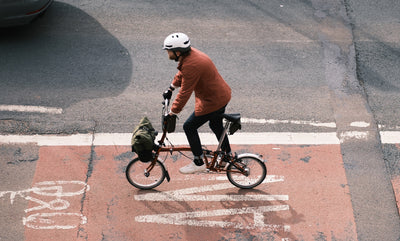
During the first couple of weeks of my recovery, I spent a few days in Briançon for a change of scenery and to briefly escape the stifling heat of a Provençal July. Although I mostly accepted my immobile situation well, I still viewed other people riding bikes with some envy. However, it was directed less towards those heading up the famous cols in the vicinity. I envied more those riding casually around town, using the bicycle in a way that I probably cherish the most - a means of combining utility with leisure. They appeared so free, and had the ability to cover ground in a fast and carefree manner.

A sense of liberty is what I appreciated most when my cast was removed five and a half weeks after its application. Although I didn’t need the doctor to tell me ‘’no cycling for a month’’ to know I wouldn’t immediately be swinging my leg over my bike, I instantly felt more capable and in control of my recovery. The indoor trainer would still be my routine for a few weeks yet, although being able to have a post-ride shower without a bin bag over my arm was bliss.
Eight weeks after the fall, I made my first tentative pedal strokes outside. Again, progressive and cautious were the maxims. My elbow was donned with a hard-shell pad and I favoured short, flat routes that avoided traffic as much as possible. ‘’You never forget how to ride a bike’’ is not a cliche without truth, however I approached every interaction with motor vehicles with a sense of mistrust. Keen not to make the same mistake twice, patience overruled haste in my decision making.
In the grand scheme of things, not riding a bicycle for eight weeks isn’t that long and I was able to maintain a reasonable level of basic fitness beyond the initial period of total inactivity. It is still plenty long enough to provide a real sense of perspective and appreciation for when you are able to return to an activity you cherish so much. Before the accident, I may have approached my build-up to Peninsular Divide in a different manner. When returning to riding, I was mostly just grateful for the opportunity to be outside on a bicycle again. Nevertheless, I wanted to do what I could to best prepare myself for what I had signed up for. I enter races with the intention to race, and there was still time to refamiliarise myself with what ‘racing’ would demand of me. The clock was ticking though, so next up I would need to carefully balance using the remaining few weeks productively without risking any further setbacks.
---
Now Sam is back riding, expect a follow-up blog about his final preparations for The Peninsular Divide.